Mining and resources recruitment isn’t just about finding talent. It’s about getting the right people “site-ready” on time, with compliance and safety controls in place.
Mobilisation is where good sourcing either turns into reliable starts or unravels at the last minute. Remote sites, fly-in fly-out rosters, mandatory tickets and medicals all add steps that have to be sequenced and verified before a worker can set foot on site. The cost of getting this wrong is rarely just an unfilled seat — it shows up as a delayed shift start, an overloaded supervisor, or a new starter who walks off in the first week. This checklist sets out a repeatable way to define what “ready” means and to keep every supplier and site working to the same standard.
Need staffing support for mining and resources? Mining & Resources
Key takeaways
- Most mobilisation issues come from role ambiguity, onboarding bottlenecks, and logistics constraints.
- Define “site-ready” and use one checklist across sites and suppliers.
- Protect supervisor capacity in week 1 (it prevents safety and churn issues).
- Track a small KPI set (time, compliance, onboarding, attrition, attendance).
- Start the compliance clock early — medicals, inductions and ticket verification often have lead times you cannot compress at the last minute.
Why mobilisation fails (most common reasons)
- Unclear role requirements (tickets, medicals, roster expectations). When the role profile is vague, suppliers source the wrong people and compliance gaps surface days before the start.
- Onboarding bottlenecks (inductions, medicals, D&A). Limited clinic and induction slots mean a worker can be approved but still not site-ready for a week or more.
- Accommodation/travel capacity constraints. Remote and FIFO sites depend on flights, camp beds and bus runs that book out, so a confirmed start can still slip on logistics alone.
- Insufficient supervisor coverage for new starters. If week one lands on an already-stretched supervisor, safety oversight and early support both suffer.
- Inconsistent compliance verification across suppliers. When each supplier checks tickets and right-to-work differently, the host carries the risk of an unverified worker on site.
The site-readiness checklist (copy/paste)
Use the checklist below as a single source of truth that the host, the supplier and site supervision all work from. The value is in everyone signing off against the same items, so a worker is only marked ready when every step is genuinely complete rather than when individual teams assume the others have it covered.
Role clarity
- Role title and work scope confirmed
- Site location and roster confirmed
- Start date and duration confirmed
- Mandatory tickets/licences defined (verified on submission)
- Medical/fitness requirements defined (if applicable)
Compliance and onboarding
- Right-to-work verified
- Ticket/licence verification completed
- Background checks (if required)
- Medical/D&A process confirmed (if required)
- Site induction scheduled and completed
- PPE requirements confirmed
Logistics
- Travel arrangements confirmed (if applicable)
- Accommodation confirmed (if applicable)
- Muster point and first-day contact confirmed
- Fatigue plan in place for travel + shift start
On-site stabilisation
- Supervisor assigned and briefed
- Buddy system (where appropriate)
- First-week check-in scheduled (to catch issues early)
KPIs to track (simple set)
Keep the measurement set small so it actually gets reviewed. These few numbers tell you whether mobilisation is improving or quietly breaking down, and each one points to a specific fix when it moves the wrong way.
- Time-to-fill (by role)
- Onboarding cycle time (approved → site-ready)
- Compliance pass rate
- Early attrition (first week / month)
- Attendance reliability
Mobilisation timeline (example)
Week 4–2 before start
- Lock role profiles and requirements. Fixing tickets, medicals and roster expectations early stops late changes that ripple through every later step.
- Begin sourcing and pre-qualify a bench. Having more cleared candidates than seats protects the start date against last-minute dropouts.
- Book medicals/inductions where needed. These slots have lead times, so booking them before candidates are fully confirmed is often what keeps the timeline intact.
Week 2–1 before start
- Confirm travel/accommodation. Lock flights, camp beds and transfers now, as these are the constraints most likely to slip a confirmed start.
- Complete compliance checks. Close out right-to-work, tickets and any medical or D&A results so nothing is outstanding on arrival.
- Confirm day-one plan and supervisor contacts. Make sure the worker knows where to be and who to ask for, and that the supervisor is expecting them.
Day 1–7
- Run consistent onboarding
- Check-in on day 2–3 to resolve issues early
How managed workforce or MSP can help
If you’re coordinating multiple suppliers or sites, these models can standardise mobilisation and reporting:
- Managed workforce: Managed Skilled Workforce
- MSP and people solutions: MSP and People Solutions
The practical value of these models is a single definition of site-ready, one compliance workflow and one reporting view across every supplier — so the host is not reconciling different checklists and chasing evidence from each provider separately. That consistency is what makes time-to-fill and compliance pass rate comparable across sites rather than anecdotal.
Related reading
Also see: Career Change into Mining/Resources: Pathways, Tickets, Training Options.
Also see: Civil & Infrastructure Mobilisation: Workforce Plan for Project-Based Hiring.
Related services
FAQ
What’s the fastest way to improve time-to-fill?
Standardise role profiles and reduce onboarding bottlenecks (inductions/medicals) by forecasting earlier. Most of the lost time sits in the gap between approval and site-ready, not in sourcing, so booking medicals and induction slots before a candidate is even confirmed often does more than widening the candidate pool.
Should we build a pre-qualified bench?
For high-demand roles, yes. It reduces last-minute risk and improves start reliability.
Who should own the site-ready checklist?
Give one owner accountability for the checklist end to end, even where suppliers complete individual steps. A single owner can see whether a worker is genuinely ready or only partly cleared, which prevents the common failure of someone arriving on site with an induction or medical still outstanding.
Next step
If you want help recruiting and mobilising mining and resources talent: Mining & Resources
General information only: this article provides general information and is not legal advice.
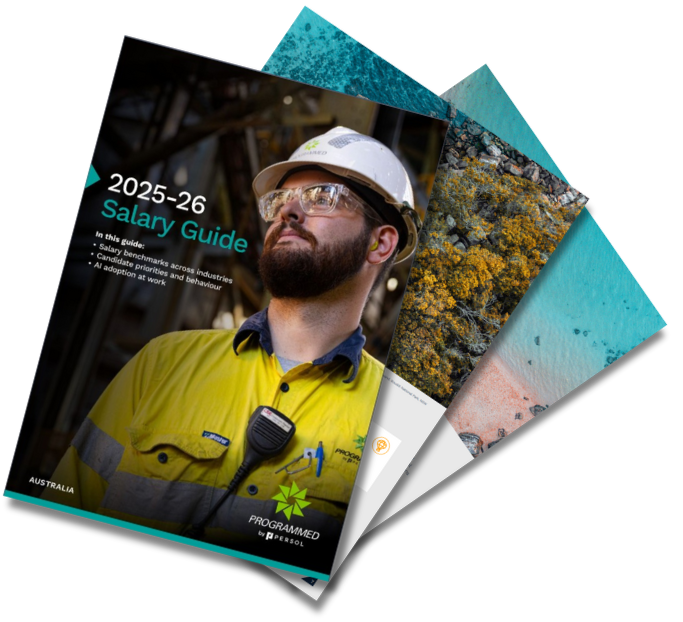
Know the Market Rate
Whether you’re comparing job offers or benchmarking pay for your workforce, the 2025-26 Salary Guide covers current rates across Australian trades and industrial roles.
Download the 2025-26 Salary Guide →