Government clients are not the same as private sector clients when it comes to labour hire. The compliance requirements are more extensive, the probity expectations are more formal, and the consequences of getting it wrong are more severe — both contractually and reputationally. Organisations that treat a government labour supply tender the same way they treat a private sector contract tender typically find they are either disqualified early or win work they struggle to deliver compliantly.
The compliance framework for government labour supply is built from multiple intersecting obligations — labour hire licensing, Fair Work compliance history, modern slavery obligations, WHS certification, and in some cases probity checks on the supplying entity and its directors. None of these are optional. Understanding them before you respond is the difference between a credible tender submission and one that raises immediate red flags with the evaluation panel.
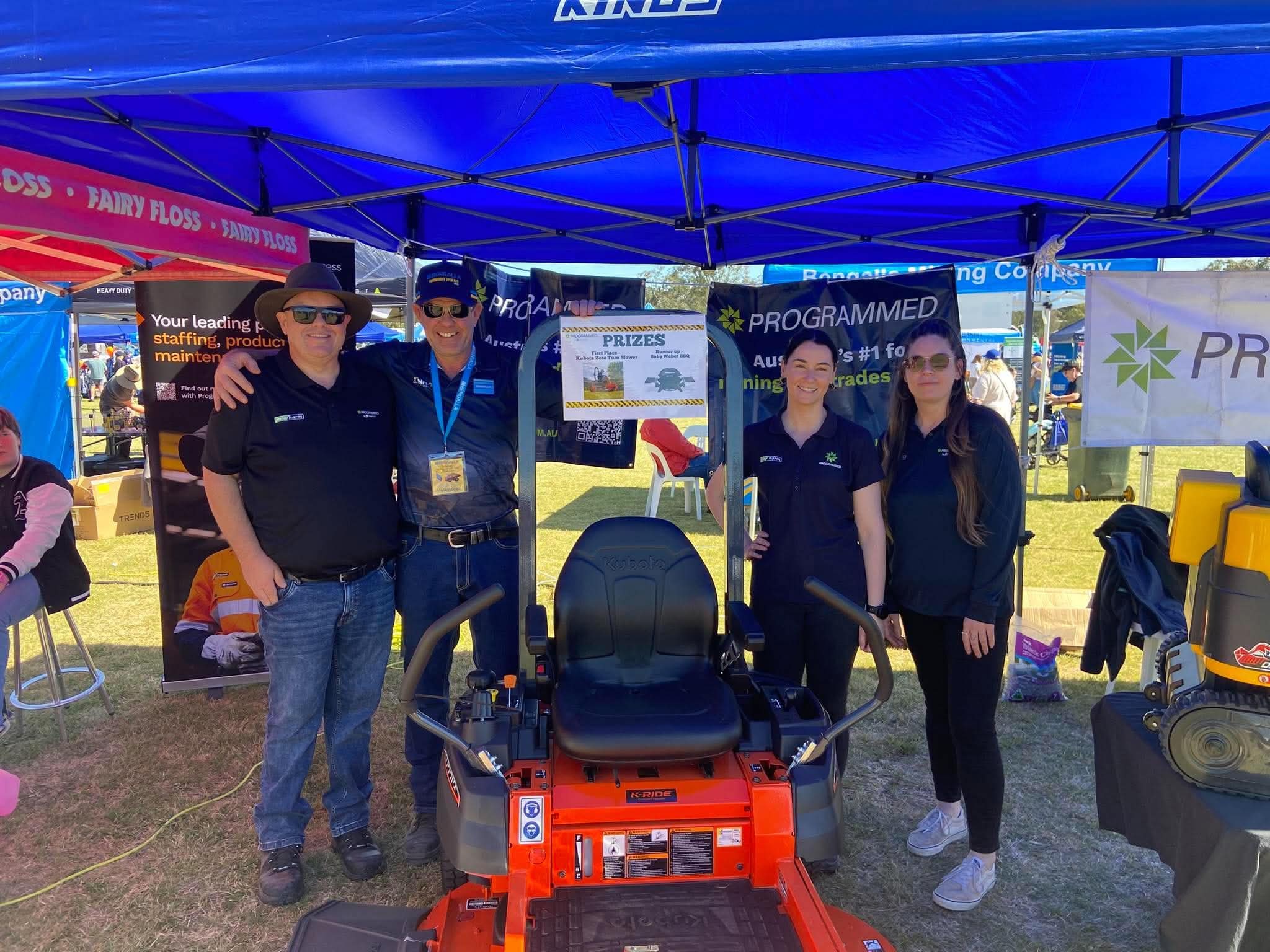
Programmed operates across government panel arrangements at Commonwealth, state, and local government levels. Our MSP and people solutions team works with organisations navigating these requirements — whether as prime contractor or as a labour supply subcontractor within a larger tender.
Key takeaways
- Government labour supply tenders typically require labour hire licensing, a clean Fair Work compliance history, modern slavery reporting, and WHS certification — confirming these in advance avoids last-minute disqualification.
- Subcontracting arrangements must be disclosed and, in most cases, pre-approved by the government client — undisclosed second-tier providers are a significant contract risk.
- Pricing that undercuts competitors by stripping compliance costs is a false economy in government contracts — audits are common and non-compliance consequences are more severe than in the private sector.
How government clients procure labour supply
Government clients — Commonwealth agencies, state and territory departments, local councils, and statutory bodies — typically procure labour through one of two mechanisms: standing panel arrangements (where prequalified providers are invited to respond to individual work orders) or project-specific tenders (for large or complex labour supply requirements). Both involve a formal evaluation process, and both apply the same compliance framework to any organisation seeking to supply workers.
Government procurement policy in most jurisdictions has become significantly more rigorous on workforce compliance over the past five years, driven by concerns about wage theft, modern slavery, and labour hire licensing non-compliance. Evaluation criteria now routinely include compliance history as a scored dimension, not just a pass/fail gate.
Core compliance requirements in government labour supply tenders
The following requirements appear in most government labour supply tenders. Confirm your status on each before you respond:
- Labour hire licence: Labour hire licensing legislation is in force in Queensland, Victoria, South Australia, and the ACT, with Western Australia’s scheme operational. If you are supplying workers to government clients in these states without a current licence, you are supplying illegally and the tender will be void. Licences must be current in each state where work is performed, not just where your organisation is incorporated. For the full licensing framework, see Labour Hire Licensing in Australia: What Employers Need to Know.
- Fair Work compliance history: Most government tenders require confirmation of no adverse Fair Work Commission or Fair Work Ombudsman findings within a defined lookback period — typically three to five years. This includes no infringement notices, no enforceable undertakings, and no court orders relating to underpayments. If your organisation has any such history, take legal advice before responding.
- Modern slavery statement: Entities with $100M or more in annual consolidated revenue must lodge an annual modern slavery statement under the Modern Slavery Act 2018. Government clients will check whether a statement exists and whether it substantively addresses supply chain risks. A thin or non-existent statement in a category where labour supply chains carry genuine modern slavery risk is likely to score poorly. See Modern Slavery and Workforce Supply Chains in Australia for a detailed treatment.
- WHS management system: Most government tenders require certification or evidence of a WHS management system — either third-party certified (ISO 45001 or equivalent) or demonstrably compliant with the relevant state WHS legislation. Evidence of a current WHS audit, an improvement notice history, or an incident rate significantly above industry benchmark will raise questions.
- Insurance: Public liability (minimum $20M is common in government tenders), professional indemnity (where relevant), and workers compensation coverage for all states of operation. Confirm your coverage limits are sufficient before responding — government clients often have higher minimums than private sector clients.
- Award or EA compliance: Workers supplied under government contracts must be employed on the applicable modern award or enterprise agreement with no underpayments. Government clients in several jurisdictions now require statutory declarations confirming compliance at contract execution and periodically during the contract term.
Probity requirements
Some government tenders — particularly for long-term panel arrangements or security-sensitive agencies — extend their compliance requirements to a formal probity check on the supplying entity. This may include:
- Financial standing of the entity — no insolvency, receivership, or significant outstanding tax liabilities
- No criminal convictions relevant to the nature of the contract, for the entity or its directors
- No disqualified company directors on the board or in senior management
- No prior contract terminations for cause with government clients
Probity requirements are disclosed in the tender documents. If your organisation has any history that might be relevant, take legal advice and consider whether a probity declaration is appropriate before responding. Disclosing proactively with context is typically treated more favourably than a finding made during the government’s own due diligence process.
Subcontracting disclosure obligations
This is one of the most frequently misunderstood requirements in government labour supply contracts. The assumption that you can fulfil a government labour supply contract by passing work to a second-tier provider without disclosure is wrong.
Most government contracts require prior written approval of any subcontracting arrangement. Some prohibit subcontracting of the core labour supply obligation entirely. The obligation typically applies to the supply of workers specifically — engaging another labour hire provider to fill roles you have contracted to fill is precisely the arrangement that must be disclosed and approved.
The practical implication: if you cannot source directly in the jurisdictions or role categories you are tendering for, either partner with a disclosed subcontractor at tender stage (named and with their compliance documents attached), or don’t tender for that scope. Undisclosed subcontracting discovered during contract delivery or audit is grounds for immediate termination and possible debarment from future government panels.
Diversity, inclusion, and workforce reporting requirements
A growing number of government contracts — particularly those with Commonwealth agencies and the larger state jurisdictions — include contractual obligations around workforce diversity metrics. Requirements that now appear regularly include:
- Indigenous employment targets or commitments — specific percentage of contract hours delivered by Indigenous workers
- Gender pay equity reporting — evidence that workers supplied under the contract are not subject to discriminatory pay structures
- Disability employment — some contracts require active engagement with supported employment providers
- Social procurement metrics — evidence of spend with social enterprises or disadvantaged suppliers
The key operational point: if these obligations are in the contract, you need data collection systems running from day one of delivery, not from reporting time. Retrospectively constructing workforce diversity data from payroll records is time-consuming, error-prone, and will not produce the quality of reporting government clients expect. Build the reporting infrastructure before you mobilise.
Pricing for government tenders: the compliance cost trap
Government clients expect value for money, and competitive pricing matters. But government contracts are also the most heavily audited labour supply context in Australia. Wages and conditions are checked. Modern slavery obligations are scrutinised. WHS systems are verified. Insurance certificates are pulled.
Pricing that wins a government tender by stripping out the cost of real compliance is a short-term gain with a long-term liability attached. The cost of a Fair Work audit finding, a modern slavery non-compliance event, or a WHS improvement notice under a government contract — in terms of remediation, potential contract termination, and future panel exclusion — significantly exceeds any margin gained from non-compliant pricing.
Related reading
Also see: Government Contract Labour: Compliance, Probity and Panel Arrangements.
For a broader view of how total cost of workforce — including compliance cost — should factor into labour hire procurement decisions, see Total Cost of Workforce: Beyond the Markup Rate.
Related services
MSP and People Solutions: Programmed operates on government panels across multiple jurisdictions. Our compliance framework — licensing, Fair Work, modern slavery, WHS certification — is maintained across all operating states.
Managed Skilled Workforce: For government clients seeking an end-to-end workforce solution that handles compliance management, reporting, and diversity obligations within the contract delivery model.
FAQ
Do we need a labour hire licence to respond to a government tender if we operate nationally?
Yes — and you need a separate licence for each state where licensing is in force and where you will supply workers. A licence issued in Queensland does not authorise labour hire supply in Victoria or South Australia. If your tender covers multiple states, confirm your licence status in each before responding. Licence applications can take several weeks to process; don’t leave this until the day before submission.
What if our modern slavery statement is still being developed — can we still respond?
If your annual revenue is at or above the $100M threshold, the absence of a current lodged statement is a compliance gap that will be visible to the government client. For entities below the threshold, a voluntary statement or a substantive response to modern slavery questions in the tender is still expected by most government procurement teams. A clear, honest account of your supply chain due diligence process is more persuasive than silence.
How do Indigenous employment commitments work in practice?
Most government contracts with Indigenous employment requirements express the commitment as a percentage of contract labour hours or headcount, not a fixed number. Delivery typically requires active engagement with Indigenous employment organisations, community partnerships, or registered training organisations that work with Indigenous job seekers. Build these relationships before the contract starts — they cannot be assembled at short notice when a reporting deadline is approaching.
Can a compliance finding from a previous contract affect our eligibility for a new government tender?
Yes. Many government procurement frameworks include a formal probity assessment that considers prior contract performance, including any compliance findings. Some panel arrangements explicitly exclude entities with unresolved Fair Work findings or contract terminations for cause within a defined period. Disclose proactively and with context rather than hoping the finding won’t be discovered.
Next step
If your organisation is preparing a government labour supply tender response or reviewing its compliance position ahead of a panel renewal, talk to Programmed’s MSP and people solutions team. We can provide guidance on how our compliance framework operates and how we structure government supply arrangements to meet the obligations outlined here.
General information only: This article is for general informational purposes only and does not constitute legal advice. Legislation varies by state and territory — consult a qualified employment lawyer or Fair Work adviser for guidance specific to your situation.