Mining interviews are usually less about “perfect answers” and more about safety mindset, reliability and attendance, ability to follow procedures, and being ready to mobilise (rosters, travel, site requirements).
Most interviewers are weighing up one practical question: can this person turn up, work safely, and stay for the length of the roster? If you can show clear evidence on those points and prove you are site-ready, you are already ahead of candidates who focus only on technical detail. The sections below walk through the themes employers screen for, the questions you are likely to face, and a simple way to prepare.
Ready to start looking? Search current roles: Programmed jobs search
Key takeaways
- Employers are screening for safety mindset, reliability, and mobilisation readiness.
- Prepare short STAR examples that show safe behaviour, teamwork, and problem solving.
- Have documents ready so you can mobilise quickly (tickets, ID, qualifications).
- Be honest about rosters, travel, and availability—mismatch drives early churn.
- Attitude and reliability often matter as much as experience—adjacent backgrounds can succeed with the right mindset.
What employers want to know (the 5 themes)
- Safety: do you follow procedures and speak up?
- Competency: can you do the work required?
- Reliability: will you show up consistently on roster?
- Team fit: can you work respectfully in a crew?
- Mobilisation: are you “site-ready” (documents, tickets, checks)?
Common mining interview questions (and how to answer)
Safety questions
- “Tell me about a time you stopped a job for safety.” Use a clear example: what you saw, what you did, who you told, and what changed.
- “How do you handle a supervisor asking you to do something unsafe?” Emphasise asking questions, following procedures, escalating respectfully, and never bypassing critical controls.
- “What does a good pre-start or toolbox talk look like to you?” Show that you treat it as a real risk check, not a formality—raising hazards, confirming controls, and knowing the plan before work begins.
Work and competency questions
- “What equipment/plant have you worked on?” Be specific about makes, types and your role, and be honest about where your experience starts and stops.
- “What maintenance tasks have you done?” Describe routine and breakdown tasks you have handled, and how you worked to the relevant procedure or work pack.
- “How do you read and follow work packs or drawings?” Walk through how you confirm scope, check you have the right revision, and raise anything that does not match the job in front of you.
Roster and remote work questions
- “Are you comfortable with FIFO/DIDO or regional work?” Be realistic about the swing length, travel and time away from home you can genuinely sustain—overcommitting here is a common cause of early churn.
- “How do you manage fatigue on long rosters?” Talk about sleep, hydration, routines, and personal responsibility.
Behavioural questions
- “Tell me about a conflict on site and how you resolved it.” Focus on staying professional, communicating directly, and keeping the work and the crew safe rather than on who was right.
- “Describe a time you made a mistake—what did you do next?” Own it, communicate early, and explain the fix and prevention.
Mobilisation readiness questions
- “Do you have the required tickets/licences?” Know exactly what you hold, when it expires, and what you would need to obtain for the role.
- “Can you complete a medical/D&A if required?” Confirm you are willing and able to complete pre-employment medical and drug and alcohol screening, as these are standard on most sites.
- “When can you start?” Give an honest date, including any notice period, so mobilisation can be planned without surprises.
How to prepare (simple checklist)
Before the interview
- Read the job ad and write down roster, location, start date, and required tickets. Knowing these details lets you ask sensible questions and avoid committing to something that will not work for you.
- Prepare 3–4 short STAR stories (safety intervention, teamwork under pressure, solving a technical/operational problem, reliability/attendance). Keep each one to a minute or so—situation, task, action, result—so you can answer behavioural questions without rambling.
- Confirm your documents are ready (digital copies): licences/tickets, qualifications, and ID/right-to-work evidence. Having clear, current copies on hand means you can mobilise the moment an offer lands.
During the interview
- Be honest about what you have and what you don’t. Overstating tickets or experience usually surfaces at verification or on site, and costs you trust.
- Don’t guess about tickets or requirements—ask clarifying questions. A good question shows you take the requirements seriously rather than assuming you will work it out later.
- Show you understand safety systems and following procedures. Reference how you use pre-starts, JSAs, permits or take-5 checks so the interviewer can see safety is part of how you work, not an afterthought.
After the interview
- Follow up professionally. A short, polite message thanking the interviewer and confirming your interest keeps you front of mind.
- Keep availability updated so mobilisation isn’t delayed. Let your recruiter know promptly if your start date, location or ticket status changes.
Related reading
Also see: How Labour Hire Works in Australia (Jobseekers): Pay, Rosters, What to Expect.
- Site-ready checklist and mobilisation planning: mining & resources mobilisation checklist
Helpful pages
FAQ
Do I need mining experience to get a mining job?
Not always. Many roles accept adjacent experience if you have the right attitude, reliability, and site readiness. Backgrounds in construction, agriculture, trades, transport and the defence force often transfer well, especially where you can show a strong safety record and willingness to learn.
What’s the biggest interview mistake?
Downplaying safety or trying to “wing it” on site requirements. Treating safety as a box-ticking exercise, or bluffing about tickets and availability, is what most quickly ends an application.
What should I ask the interviewer?
Sensible questions about the roster, site location, mobilisation steps and the support available show genuine interest and help you confirm the role fits your situation before you commit.
Next step
Search current roles: Programmed jobs search
General information only: this article provides general information and is not legal advice.
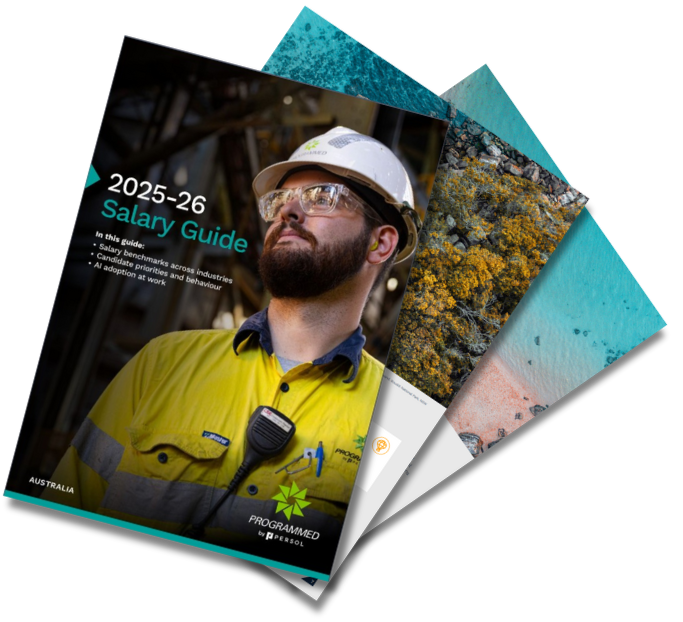
Know the Market Rate
Whether you’re comparing job offers or benchmarking pay for your workforce, the 2025-26 Salary Guide covers current rates across Australian trades and industrial roles.
Download the 2025-26 Salary Guide →