Sham contracting is not always deliberate. Some employers misclassify workers as independent contractors because they copied an arrangement that seemed to be working elsewhere, because they wanted to reduce on-costs, or because someone told them it was standard in their industry. The Fair Work Act does not recognise those explanations as a defence.
This guide explains what sham contracting is under Australian law, how it arises in practice, and what employers can do to identify and reduce their exposure.
Need help structuring your workforce model compliantly? Explore managed skilled workforce solutions.
Key takeaways
- Sham contracting is a civil penalty provision under the Fair Work Act — it does not require intent in all cases.
- The 2022 High Court decision in CFMEU v Personnel Contracting changed how courts determine employment status — contract terms now carry more weight than conduct after the fact.
- Employers who engage labour through a licensed provider carry different risk to those who engage individuals directly — but the distinction matters only if the arrangement is genuinely structured.
What sham contracting means under the Fair Work Act
Sections 357 to 359 of the Fair Work Act 2009 (Cth) create three distinct sham contracting prohibitions. Understanding each one matters because they cover different fact patterns and carry separate consequences.
- Section 357 — misrepresentation: an employer cannot represent to an employee that their contract of employment is a contract for services (i.e. tell them they are a contractor when they are legally an employee). This applies regardless of whether the employer knew the representation was false, unless the employer reasonably believed it to be true.
- Section 358 — dismissal to re-engage as contractor: an employer cannot dismiss an employee for the purpose of then engaging that person as an independent contractor to perform substantially the same work.
- Section 359 — false statements to induce contractor arrangement: an employer cannot make a false statement to persuade an employee to enter into a contractor arrangement.
Civil penalties for breaches can reach hundreds of thousands of dollars for corporations. The Fair Work Ombudsman has the power to investigate, prosecute and publicise findings — reputational exposure often exceeds the financial penalty.
How employment status is determined now
The 2022 High Court decisions in CFMEU v Personnel Contracting and ZG Operations v Jamsek shifted the primary test for employee versus contractor status. Courts now look first at the terms of the written contract — what it actually says about the nature of the relationship — rather than at how the parties behaved after signing. If the contract is comprehensive and does not disguise an employment relationship, that carries significant weight.
This does not mean the conduct of the parties is irrelevant. Where there is no written contract or where the contract is incomplete, courts still consider practical indicators including:
- whether the worker can subcontract or delegate the work
- whether the worker provides their own equipment or tools
- whether the worker bears financial risk for a defective result
- whether the worker is integrated into the business or operates independently
- whether the worker can work for others concurrently
A written contract that calls someone a “contractor” is not sufficient by itself. If the practical substance of the arrangement looks like employment — set hours, one client, employer-controlled work method, employer-supplied tools — the label will not hold.
Common arrangements that create sham contracting risk
- ABN arrangements for ongoing site roles: engaging a worker on an ABN for a role that is permanent, supervised and single-client is the most common pattern FWO investigates in trade and construction.
- Converting employees to contractors without restructuring the work: if the duties, hours, supervision and tools stay the same after the switch, the substance of the relationship has not changed.
- Industry norm arguments: “everyone in our sector does it this way” is not a defence. The FWO and courts assess each arrangement individually.
- Owner-driver models in logistics: where the driver uses their own vehicle and sets their own hours, contractor status may be supportable. Where the vehicle is company-branded, hours are set by the dispatcher and there is a single client relationship, the analysis is more difficult.
What the Fair Work Ombudsman looks for
FWO sham contracting investigations are typically triggered by worker complaints, industry-wide audits in high-risk sectors (cleaning, horticulture, construction, transport, labour hire), or tip-offs from competitor businesses. The agency looks for patterns — not just individual arrangements — and is particularly focused on whether workers in contractor arrangements are receiving their lawful entitlements including minimum pay, superannuation and leave.
If FWO finds a sham contracting arrangement, it can issue compliance notices, pursue civil penalty proceedings, require back-payment of entitlements and publish the outcome publicly. The reputational cost of a published outcome can affect supplier panel standing, procurement tender eligibility and brand perception in tight labour markets.
How labour hire reduces sham contracting risk — and where it does not
Using a licensed labour hire provider shifts the employment relationship to the provider. The host employer does not employ the worker — the provider does. This is a genuinely different legal structure, not a rebranding exercise, and it removes the direct sham contracting exposure for the host on correctly structured arrangements.
The risk remains where the arrangement is not genuinely arm’s-length — for example, where a worker is converted from direct employment, re-engaged through a related entity, and nothing about their actual working conditions changes. Structure matters. For more on licensing obligations that apply to labour hire providers operating in Australia, see labour hire licensing in Australia. For WHS responsibilities that sit alongside employment classification, see WHS responsibilities in labour hire.
Practical steps for employers
- Audit any contractor arrangements where the worker is performing a role that a direct employee would otherwise fill — particularly where hours, supervision or tools are employer-controlled.
- Review written contracts for contractor arrangements: do they accurately reflect the nature of the work, including the right to subcontract, the provision of equipment and the allocation of risk?
- Do not change a worker’s classification without changing the substance of the arrangement. Label changes alone are not sufficient.
- Where in doubt, seek advice from an employment lawyer or the Fair Work Ombudsman’s advisory service before the arrangement is established — not after a complaint is received.
Related reading
Also see: Labour Hire vs Permanent Recruitment: Choosing the Right Hiring Model.
Also see: Fixed-Term Contract Limits Under Fair Work: What Employers Need to Know.
Also see: WHS Responsibilities in Labour Hire: Who Is Accountable (Host vs Provider)?.
For a closely related guide, read Casual Conversion Under Fair Work: Employer Obligations + Checklist.
Related services
FAQ
Can we be liable for sham contracting if we didn’t intend to misclassify the worker?
Yes, under section 357. The misrepresentation provision does not require intent — it applies unless the employer can show they reasonably believed the representation was true. Reasonable belief requires more than assuming the arrangement was fine because it had been running without complaint.
Does using an ABN automatically make someone a contractor?
No. Having an ABN is not determinative of contractor status. Courts look at the substance of the arrangement — the contract terms and, where those are absent or ambiguous, the practical indicators of the relationship.
What is the penalty for a sham contracting breach?
Civil penalties for corporations can currently reach up to $93,900 per contravention under the Fair Work Act, with higher penalties for serious or repeated breaches. Back-payment of entitlements, superannuation and interest may also be ordered. Amounts are subject to legislative change — check current FWO guidance for current figures.
We’ve been running a contractor arrangement for years with no issues. Are we safe?
Length of time does not create legal protection. If the arrangement would not withstand FWO scrutiny today, prior years of operation without complaint do not change that. An audit or worker complaint can trigger a retrospective review of entitlements going back several years.
Next step
If you want to review your workforce model for sham contracting exposure or explore compliant contingent workforce structures, explore managed skilled workforce solutions.
General information only: This article is for general informational purposes only and does not constitute legal advice. Legislation varies by state and territory — consult a qualified employment lawyer or Fair Work adviser for guidance specific to your situation.
Know the Market Rate
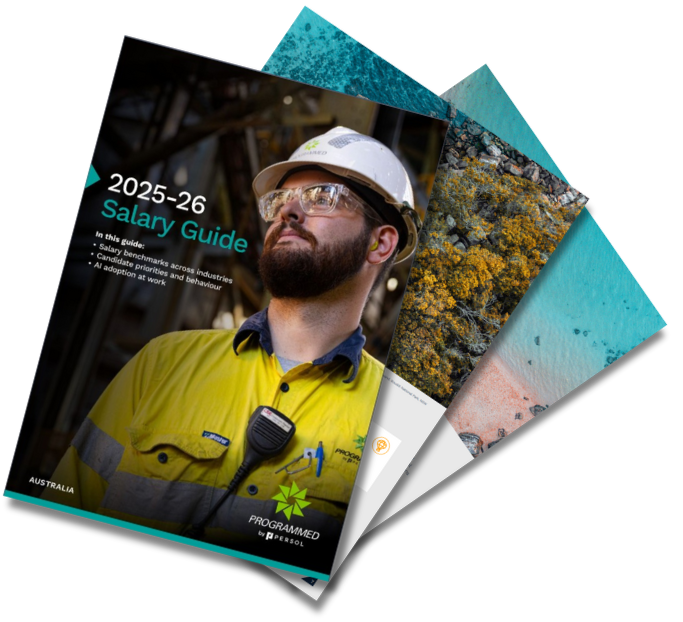
Whether you’re comparing job offers or benchmarking pay for your workforce, the 2025-26 Salary Guide covers current rates across Australian trades and industrial roles.
Download the 2025-26 Salary Guide →