Oil and Gas Labour Hire: Site Safety, Competency and Mobilisation
Oil and gas sites operate differently from general construction or mining. The hazards are different in character, the regulatory requirements are more demanding in specific areas, and the consequences of getting competency or safety management wrong are more severe. For labour hire to work in this sector, the provider needs to understand those differences — not just be able to fill a timesheet.
What Makes Oil and Gas Sites Different
The core difference is process safety. On a general construction site, the primary hazards are physical — falls, struck-by, plant and equipment. On an oil and gas facility, you add flammable and toxic atmospheres, high-pressure systems, complex isolation requirements and the risk of events that escalate rapidly. A procedural failure that would cause a minor incident on a construction site can cause a catastrophic one on a process facility.
Specific features of oil and gas site safety that workers and providers must understand include:
- Hazardous area classification: Areas where flammable atmospheres may exist are classified (Zone 0, 1, 2 for gas; Zone 20, 21, 22 for dust). All equipment operated in those zones — including hand tools and personal devices — must be rated for that classification. Workers need to understand what this means for their work and tools.
- Permit-to-work systems: PTW systems govern when and how work can be performed in controlled areas. They are more complex than basic hot work or confined space permits. Workers must be able to interpret their permit and understand what it authorises — and what it doesn’t.
- Isolation management: Lockout/tagout on a process facility involves isolating energy sources across multiple systems — mechanical, electrical, hydraulic, process. The isolation standard on an oil and gas site is more stringent than general industry, and workers unfamiliar with it are a hazard to themselves and the crew.
- SIMOPS — simultaneous operations: When multiple activities occur in the same area at the same time, SIMOPS management governs how they interact and what additional controls apply. Workers need to be aware when they’re operating in a SIMOPS environment.
Competency Verification in Oil and Gas
Oil and gas operators set their own competency requirements, and these vary. There is no single national standard that covers all roles across upstream, midstream and downstream. What a labour hire provider must do is verify against the specific requirements of the operator before mobilising — not against a generic checklist.
Common competency requirements include:
- Trade licensing: Electrical workers must hold the appropriate state licence for the work they’ll perform. Instrumentation technicians operating in hazardous areas typically need hazardous area endorsements or specific EEHA (Electrical Equipment in Hazardous Areas) competency — see our detailed article on E&I trades licensing and labour hire.
- OPITO standards: For offshore oil and gas roles — particularly on platforms or FPSOs — OPITO-certified training requirements apply. Basic Offshore Safety Induction and Emergency Response (BOSIET) or Minimum Industry Safety Training (MIST) are commonly required. These have defined validity periods and must be current.
- Operator-specific training: Many operators require completion of their own site safety induction, process safety awareness training or competency assessment before access is granted. This cannot be substituted by a generic industry training record.
- Gas testing and monitoring: Workers entering confined spaces or working in potentially hazardous atmospheres need gas testing competency. For supervisory roles, this is mandatory.
The Mobilisation Process for FIFO and FIDO Oil and Gas Roles
Mobilisation for oil and gas is more involved than for most other sectors. Each step in the sequence must be completed and verified before the next can proceed, and delays compound. For more on the general principles of mobilisation planning, see our resource on mining and resources mobilisation and our energy sector workforce planning guide.
The typical mobilisation sequence for an oil and gas FIFO role:
- Medical clearance: A site-specific or industry-standard pre-employment medical, often including audiometry, spirometry and vision testing. Offshore roles may require an Offshore Medical Certificate. Results must meet the operator’s standards — not just pass a generic fitness-for-work test.
- Drug and alcohol testing: Pre-mobilisation D&A is standard. Some operators require testing within a defined window before mobilisation — tests completed too far in advance are not accepted.
- Licence and certification verification: Physical copies or certified originals of all licences, trade certificates and safety tickets. Expiry dates are checked against the scheduled rotation. A ticket expiring mid-swing may prevent deployment.
- Site induction: Operator induction may be conducted in person, online, or on-site on arrival. It must be completed before access is granted. Some operators run inductions only on specific days — missing the induction window delays the entire mobilisation by a week or more.
- Travel logistics: FIFO flights are typically charter — not commercial. Travel documents must be confirmed in advance. Personnel arriving late miss the flight and are not replaced by the next commercial service.
Why Mobilisations Fail or Are Delayed
Most mobilisation failures are administrative, not capability-related. Common causes:
- Medical or D&A test not scheduled early enough, leaving no time to retest or resolve a result
- A certification has expired and the worker assumed it was still valid
- Operator-specific induction not completed before travel date
- Name discrepancy between travel document and booking
- Worker not reachable at short notice when mobilisation is confirmed
A provider who has mobilised workers to oil and gas sites before has systems to catch these failures early. A provider who hasn’t will discover them at the point of failure.
What a Responsible Labour Hire Provider Does Differently in This Sector
For oil and gas specifically, look for a provider who tracks certification expiry as part of worker management, has existing relationships with the operators or EPCs your site uses, understands the hazardous area classification requirements for the trade categories they place, and has a mobilisation coordinator role rather than relying on a recruiter to manage logistics. For specialist oil and gas and resources workforce services, visit our energy and resources service page and mining and resources staffing page.
Related reading
For a closely related guide, read Manufacturing Workforce Strategy: Flexible Capacity Without Losing Capability.
Related services
FAQ
What is SIMOPS and why does it affect labour hire in oil and gas?
Simultaneous operations (SIMOPS) refers to situations where multiple activities are being carried out concurrently on a site — for example, maintenance work alongside production operations. SIMOPS creates elevated safety risk and typically requires additional coordination, permit controls and supervision. Labour hire workers on a SIMOPS site need to understand the specific restrictions and controls in place, which must be covered in site induction and daily briefings.
Do oil and gas sites require OPITO certification for all workers?
OPITO standards are primarily associated with offshore operations — particularly helicopter underwater escape training (HUET) and offshore survival courses. They are not universally required for all onshore oil and gas roles. Whether a specific OPITO standard is required depends on the site, the operator and the role. Confirm requirements with the operator or EPC before sourcing.
How long does oil and gas site mobilisation typically take?
For FIFO roles at remote upstream sites, allow ten to fourteen weeks from sourcing start to first day on site when medicals, drug and alcohol screening, hazardous area competency verification and multi-stage induction are involved. Downstream or onshore roles with simpler induction requirements can sometimes mobilise in four to six weeks, but this is not reliable for specialist trade categories.
What happens if a worker fails a pre-employment medical at mobilisation?
The worker cannot proceed to site. This is a significant operational risk when mobilisation timelines are tight. A responsible labour hire provider completes pre-employment medicals as part of the sourcing process — not on the day of mobilisation — so that a failed medical can be managed with enough time to source a replacement.
Next step
If you need labour supply for oil and gas operations — onshore or offshore, shutdown or operational, explore mining and resources staffing.
General information only: This article is for general informational purposes only and does not constitute legal advice. Legislation varies by state and territory — consult a qualified employment lawyer or Fair Work adviser for guidance specific to your situation.
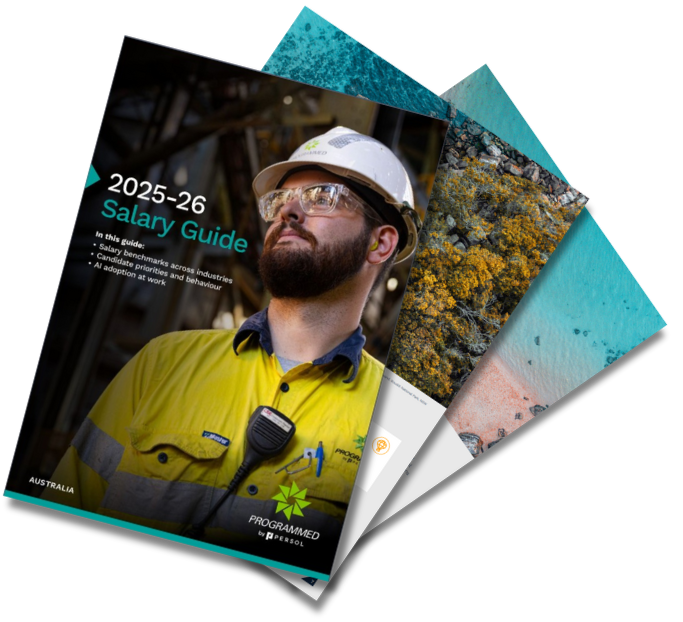
Know the Market Rate
Whether you’re comparing job offers or benchmarking pay for your workforce, the 2025-26 Salary Guide covers current rates across Australian trades and industrial roles.
Download the 2025-26 Salary Guide →