Electrical and instrumentation trades sit at the intersection of high compliance demand and persistent workforce scarcity in the Australian energy and resources sector. Getting the licensing right is not optional — and getting the sourcing right before mobilisation is what separates projects that start on time from those that don’t.
This guide covers the licensing framework for E&I trades in Australia, the compliance obligations that apply on energy sector sites, and how labour hire works for this workforce category.
Need E&I trade supply for energy or resources operations? Explore mining and resources staffing.
Key takeaways
- Electrical licensing in Australia is state-regulated — a licence that covers certain work in one state may not be recognised or sufficient in another.
- Instrumentation trades are less formally licensed than electrical but carry significant site-specific competency requirements, particularly on process and hazardous area sites.
- Labour hire for E&I roles requires pre-verified licence and competency profiles — verification at mobilisation is too late for most project timelines.
Electrical licensing in Australia — the state-by-state reality
Electrical licensing is regulated at the state and territory level, which creates a compliance complexity for employers running operations or projects across multiple jurisdictions. There is no single national electrical licence that permits work in all states. While mutual recognition arrangements exist, they are not automatic for all work types and require the worker to register in the relevant state before commencing licensed electrical work.
The key licence classifications that apply to most energy sector electrical work are:
- Electrical worker licence (unrestricted / A-grade): permits the full range of electrical installation and maintenance work. The name and classification vary by state — Queensland uses “electrical mechanic”, Western Australia uses “A-grade electrical mechanic”, and so on.
- Restricted electrical licence: covers defined scopes of electrical work — for example, solar PV installation in some states, or specific equipment types. Restricted licences are not equivalent to an unrestricted licence for general site electrical work.
- Electrical contractor licence: required for the business entity, not the individual, where electrical work is performed commercially. Host employers using labour hire are typically not required to hold contractor licences themselves — the provider holds the relevant licence — but the arrangement needs to be correctly structured.
For large energy projects operating across state borders — for example, a renewables project with sites in WA, SA and NSW — the sourcing strategy needs to account for state-specific licence requirements. A worker licenced only in their home state cannot legally perform restricted electrical work in another state without first obtaining recognition or registration there.
Hazardous area competency — what this means for E&I trades
On oil and gas, LNG, chemical and petrochemical sites, electrical and instrumentation workers are often required to demonstrate competency in hazardous area work — working in classified zones where flammable gas or dust may be present. This is typically evidenced through formal competency units (such as those under the UEE electrotechnology training package) or site-specific induction and assessment programs.
Hazardous area competency is site-specific and operator-specific — what one operator accepts may not satisfy another’s requirements. Employers and their labour hire providers need to understand the site’s specific requirements before sourcing, not after a worker arrives on site and is turned away at induction. For complex or high-risk sites, it is worth requesting the site’s competency requirements from the operator or principal contractor early in the planning process.
Instrumentation trades — competency without a licence framework
Unlike electrical work, instrumentation — calibration, installation and maintenance of measurement, control and automation systems — does not have a nationally prescribed licence in most states. What it does have is a well-established industry competency expectation, typically evidenced through trade qualifications (Certificate III in Instrumentation and Control), experience on relevant plant types, and site-specific induction.
The absence of a formal licence does not reduce the compliance requirement — it transfers more of the verification burden to the employer and the labour hire provider. On process industry sites (LNG, refinery, mining concentrators), the gap between a qualified instrumentation tradesperson and one who is genuinely competent on the specific control systems in use can be significant. Employers sourcing instrumentation trades through labour hire should be specific about control system platforms, process types and site environment — not just qualification level.
How labour hire works for E&I trade supply
Labour hire is common in E&I trade supply for shutdown, maintenance and project phases. The model works well where the provider can pre-verify licence currency, hazardous area competency and site-readiness before mobilisation — which is what separates a specialist resources sector provider from a general trades labour hire business.
- Licence verification: the provider should verify the worker’s electrical licence is current, issued in the relevant state (or that mutual recognition is in place), and covers the scope of work on site.
- Competency verification: for hazardous area and instrumentation roles, confirmation of relevant units of competency, site-specific experience and any operator-required pre-qualifications.
- Medical and fitness for work: most energy sector sites require a pre-placement medical and drug and alcohol screen. Build this into mobilisation timelines — it adds days to the process if not scheduled in advance.
- Induction sequencing: site inductions in the energy sector are often multi-stage — corporate induction, site induction, task-specific induction. Workers cannot start productive work until all stages are complete. Labour hire providers who understand this sequence can schedule workers to arrive correctly rather than arriving and waiting.
For a broader overview of workforce planning across the energy sector — including how oil and gas and renewables projects differ in their sourcing requirements — see energy sector workforce planning. For mobilisation planning across resources operations more broadly, see mining and resources recruitment and mobilisation.
Related reading
For a closely related guide, read Energy Sector Workforce Planning: Oil, Gas and Renewables.
Related services
FAQ
Can an electrician licenced in QLD work on a site in WA?
Mutual recognition provisions exist but do not automatically permit work in another state without registration. A QLD-licenced electrician working in WA typically needs to apply for recognition of their interstate licence with the WA electrical licensing authority before commencing licensed work. The process takes time — this should be factored into mobilisation planning, not treated as a formality to complete on arrival.
Is a Certificate III in Instrumentation enough to work on a process plant?
The qualification is a baseline, not a guarantee of site readiness. Most process industry operators require demonstrated experience on similar plant types, specific control system platforms, and completion of the site’s own induction and competency assessment. Verify with the site operator what their specific requirements are before sourcing.
Who is responsible for verifying a labour hire worker’s electrical licence?
The labour hire provider has a responsibility to verify credentials before placing a worker. The host employer also carries a duty of care and should confirm that their provider’s verification process is adequate — particularly for safety-critical roles. Do not assume verification has been done; confirm the process and what documentation is retained.
How far in advance should we engage a labour hire provider for E&I trade supply?
For shutdown or project mobilisations requiring hazardous area-competent E&I trades, ten to fourteen weeks is a realistic minimum for sourcing, verification, medicals and induction. In peak periods — particularly the resources sector shutdown windows in March-April and August-October — start earlier. The workers you want are usually already committed six to eight weeks ahead of mobilisation.
Next step
If you need E&I trade supply for energy, resources or industrial operations, explore mining and resources staffing.
General information only: This article is for general informational purposes only and does not constitute legal advice. Legislation varies by state and territory — consult a qualified employment lawyer or Fair Work adviser for guidance specific to your situation.
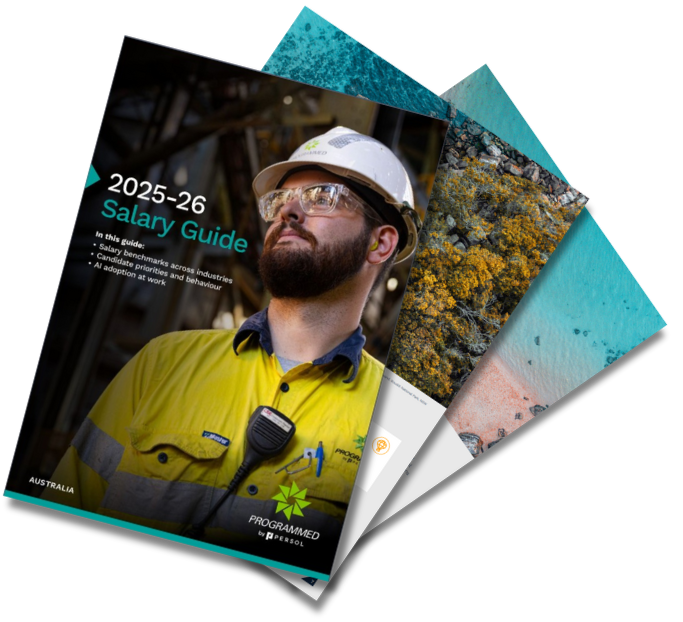
Know the Market Rate
Whether you’re comparing job offers or benchmarking pay for your workforce, the 2025-26 Salary Guide covers current rates across Australian trades and industrial roles.
Download the 2025-26 Salary Guide →