Most recruitment delays start with an unclear brief.
If the recruiter doesn’t understand the role outcome, what’s truly non-negotiable, what “good” looks like at day 30/90, and how decisions will be made, you’ll often get slow shortlists, mismatched candidates, and longer time-to-fill.
The brief is where alignment is either built or lost. When the hiring manager, stakeholders and recruiter agree on outcomes and trade-offs before sourcing starts, the recruiter can screen with confidence and present a tighter shortlist. When that alignment is missing, the cost shows up later as rejected candidates, repeated rounds and a role that stays open far longer than it should. A short investment up front almost always pays for itself in a faster, better hire.
Need help recruiting for ongoing roles? Permanent Recruitment
Key takeaways
- A clear brief reduces back-and-forth and improves shortlist quality.
- Limit “must-haves” to 3–5 true non-negotiables.
- Define success outcomes (first 90 days) to reduce “culture fit” guessing.
- Set a decision timeline before you start sourcing.
- Align the hiring manager and stakeholders on the brief before briefing the recruiter, not after the first shortlist.
The one-page recruitment brief template (copy/paste)
Copy this into a doc and fill it out with the hiring manager + key stakeholders before you brief a recruiter.
Section A: Role basics
- Role title:
- Business unit / site:
- Location (and travel requirements):
- Employment type: full-time / part-time / fixed-term (and expected tenure)
- Reporting line:
- Team size / direct reports (if any):
- Start date (ideal / latest acceptable):
Section B: Why the role exists
- The problem this role solves:
- Top 3 outcomes expected in the first 90 days:
- What success looks like at 12 months:
Section C: Scope and responsibilities
- Core responsibilities (5–8 bullets):
- Key stakeholders (internal/external):
- Tools/systems used:
Section D: Must-haves vs nice-to-haves
Must-haves (no compromise):
Nice-to-haves (trade-offs allowed):
Deal-breakers (do not submit if):
Section E: Skills, experience, and requirements
- Years of experience: guidance, not a barrier
- Qualifications: mandatory / preferred
- Licences/tickets: mandatory / preferred
- Safety/compliance requirements:
- Background checks (if required):
Section F: Compensation and benefits
- Pay range (or band):
- Bonus / allowances (if applicable):
- Super, vehicle, tools, travel support (if applicable):
- Flexibility / roster expectations:
Section G: Candidate profile (helps sourcing)
- Backgrounds that tend to succeed:
- Backgrounds that tend to struggle:
- Competitors or adjacent industries to target:
Section H: Process and decision-making
- Interview stages:
- Who interviews (names/roles):
- Assessment tasks (if any):
- Reference checks: yes/no (who owns it)
- Offer approvals (who signs off):
- Target timeline:
- Brief approved by:
- Shortlist by:
- Interviews by:
- Offer by:
Section I: Employer value proposition
- Why a good candidate would join:
- What makes this role/team unique:
- Growth opportunities:
Optional: a short “why now” paragraph
What’s changing in the business that makes this role urgent?
How to use the template well
Fill the brief out in one short working session with the hiring manager and anyone who has a real say in the decision, rather than circulating it for comment over several days. The goal is a single agreed version of the role before any candidate is approached. Pay particular attention to Sections B and D — the first 90-day outcomes and the genuine must-haves — because these are where most disagreement hides and where a recruiter most needs clarity. Treat the finished brief as a living document: if requirements shift after the first shortlist, update it openly so everyone is working from the same picture.
Common mistakes (and quick fixes)
Mistake 1: “We need someone ASAP” with no decision timeline
Fix: set a shortlist date and an interview window, and pre-book time in calendars. Urgency without a committed timeline simply moves the delay from sourcing to decision-making, and strong candidates drop out while approvals stall.
Mistake 2: Too many “must-haves”
Fix: list 3–5 true non-negotiables. Everything else is a trade-off. Long must-have lists shrink the talent pool, slow the shortlist and often screen out people who would have done the job well.
Mistake 3: No clarity on pay
Fix: provide a range or band early. It saves everyone time. A defined range stops you investing rounds of interviews in candidates whose expectations were never going to align with the budget.
Mistake 4: Vague “culture fit”
Fix: define behaviours and values in observable terms (e.g. “runs pre-starts”, “documents hazards”, “coaches apprentices”). Observable behaviours can be assessed consistently across interviewers, whereas a general sense of “fit” tends to introduce bias and disagreement.
Where this template fits
This recruitment brief template supports multiple service areas:
Still deciding on the hiring model? Read: Labour Hire vs Permanent Recruitment: Choosing the Right Hiring Model
Planning a ramp-up? Use the pillar template: Workforce Planning Template (90 Days)
Related reading
Also see: How to Write a Job Ad That Attracts Quality Applicants (Not Just Volume).
Also see: Mining & Resources Recruitment: Mobilisation + Site-Readiness Checklist.
Also see: Shutdown Workforce Planning: Timeline + Checklist for Major Outages.
FAQ
Should the brief include a strict number of years of experience?
Use it as guidance, not a hard filter. Focus on capability, outcomes, and requirements. A rigid years-of-experience cut-off often screens out capable people who built the right skills quickly, or in an adjacent setting.
Should we include the pay range in the brief?
Yes. A range improves candidate fit and speeds up the process. It also keeps the recruiter, hiring manager and candidate working from the same expectations from the start.
How long should a recruitment brief take to complete?
If stakeholders are aligned, 20–40 minutes is realistic. The time saved later is significant. Where stakeholders disagree, the brief is doing its job by surfacing that disagreement before it derails the shortlist.
Next step
If you want a faster shortlist with better fit, use this template and engage a recruitment partner: Permanent Recruitment
General information only: this article provides general information and is not legal advice.
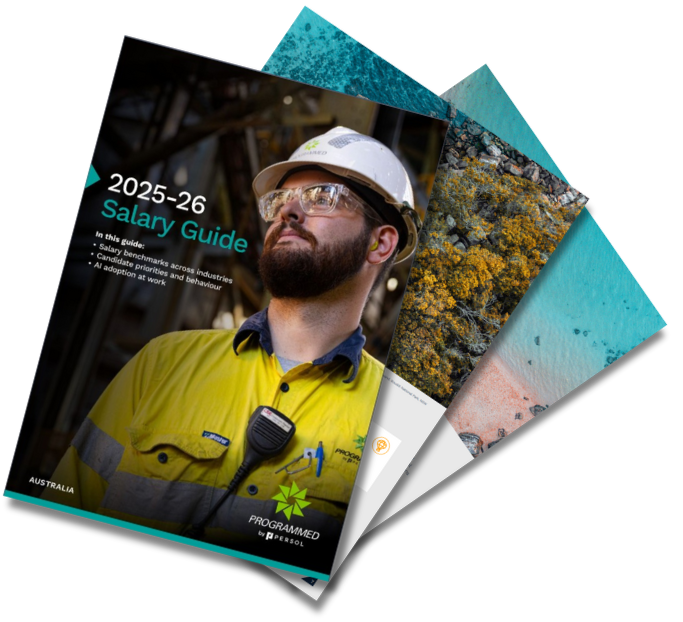
Know the Market Rate
Whether you’re comparing job offers or benchmarking pay for your workforce, the 2025-26 Salary Guide covers current rates across Australian trades and industrial roles.
Download the 2025-26 Salary Guide →